
Rethinking Aircraft Maintenance: E-Drill, Fastener Removal and the Future of MRO
Perfect Point EDM President & CEO Jim Becker joins The Merge podcast to discuss aircraft fastener removal, maintenance innovation, the skilled technician shortage, and what it takes to bring new aerospace maintenance technology to market.
Aircraft technology has advanced dramatically over the last several decades. The tools and processes used to maintain those aircraft have not always kept pace.
That was the starting point for a recent conversation between Perfect Point EDM President & CEO Jim Becker and Mike Benitez, host of The Merge, a podcast covering military technology, aerospace, defense and the people behind it.
The episode, “Rethinking Aircraft Maintenance with Perfect Point EDM,” takes a much broader look at maintenance than simply how to remove an aircraft fastener. Jim and Mike discuss the cost of keeping aircraft operational, the growing shortage of experienced technicians, why inefficient maintenance processes can survive for decades, and the challenges that come with introducing new technology into an industry where risk is taken seriously.

Aircraft Have Changed. Has Maintenance Tooling?
Jim spent 10 years in the Marine Corps as an aircraft structural mechanic before joining Boeing, where he worked on programs including the 787 and V-22. That experience gave him a front-row view of how much aircraft have changed, and how many everyday maintenance processes have not.
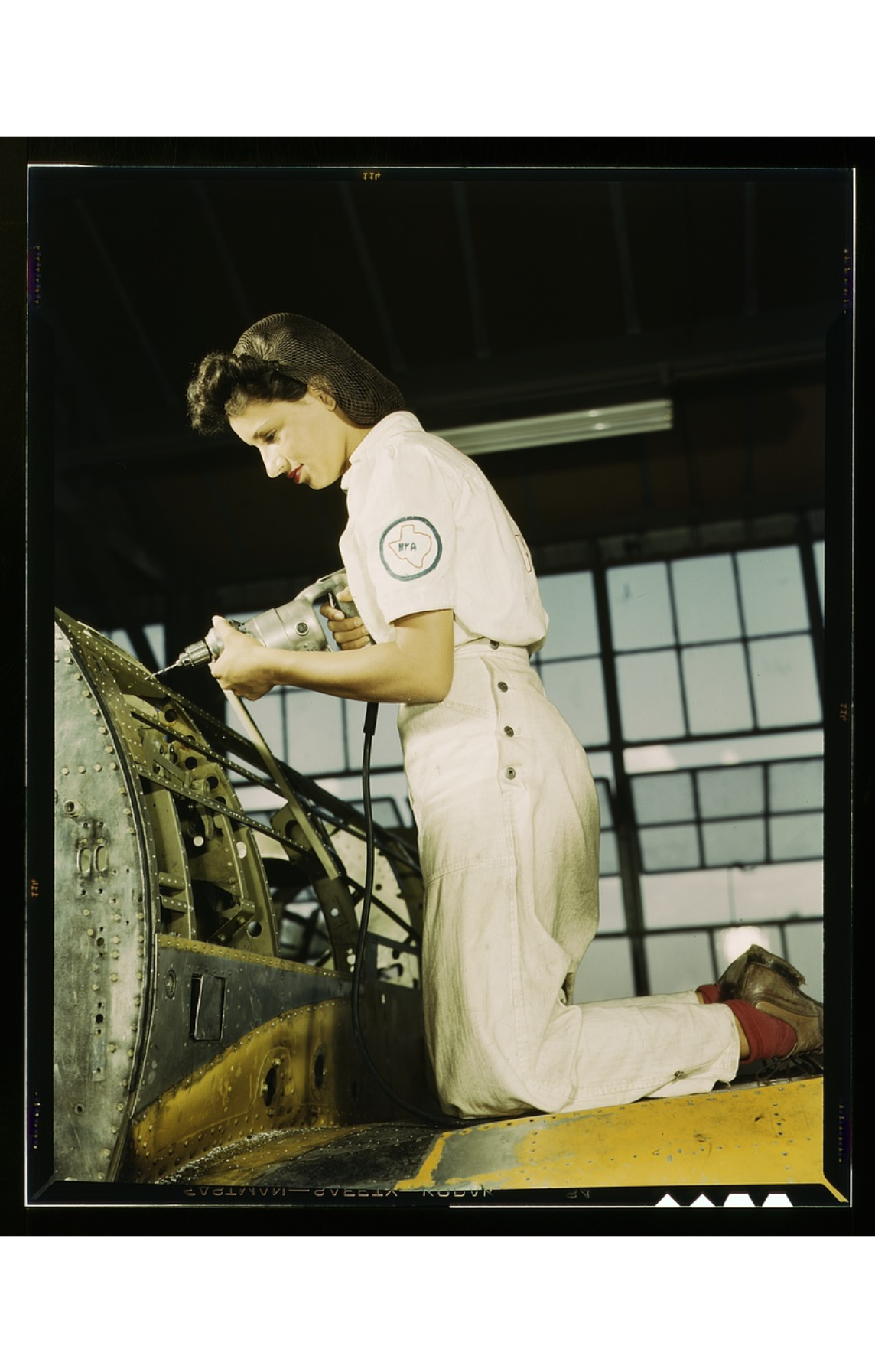 “Aerospace in the last thirty years has jumped forward exponentially. But the tools and processes… have stayed the same since the ’50s and ’60s.”
— Jim Becker
Aircraft structures increasingly incorporate composites, titanium, steel and other high-strength materials. But when those aircraft need to come apart for inspection, repair or modification, technicians may still rely on conventional twist drills and processes that have changed very little over generations.
Aircraft fastener removal is one example.
Removing a titanium Hi-Lok, blind bolt or other high-strength aerospace fastener with a conventional drill can require significant force, generate drill shavings and foreign object debris (FOD), consume tooling and introduce the risk of damage to the surrounding aircraft structure.
Perfect Point developed the E-Drill aircraft fastener removal system to approach that problem differently. Instead of mechanically drilling through the fastener, E-Drill uses a computer-controlled Electrical Discharge Machining (EDM) process to precisely remove material from the fastener head.
Learn how E-Drill aircraft fastener removal works
Focusing on the Problems Everybody Accepts
One of the clearest themes from the conversation is also one of the simplest:
“Here at Perfect Point, we focus on the problems that everybody just accepts.”
— Jim Becker
Aircraft mechanics are very good at getting the job done. That ability can also make inefficient processes surprisingly durable.
A difficult task becomes something an experienced technician simply learns to deal with. Specialized workarounds develop. Skilled mechanics compensate for limitations in the process. Eventually, “that’s just how the job is done” can become the answer.
Mike described that culture well during the conversation:
“These mechanics, culturally, make miracles happen. They’ll find a way to fix something.”
— Mike Benitez
That is an incredible strength of the aviation maintenance workforce. But it also raises an important question: How many maintenance problems have become accepted simply because good mechanics have gotten very good at working around them?
From Aircraft Mechanic to E-Drill Customer to CEO
Jim’s connection to Perfect Point started from the other side of the sales presentation.
While running a Boeing support operation in San Diego, Jim saw the E-Drill demonstrated for his team. He had already spent years personally dealing with difficult fastener removal as a Marine and Boeing mechanic.
His response after watching the technology work was essentially: “Are you guys hiring?”
Jim joined Perfect Point in 2017 and eventually became President & CEO. That career path—from technician, to customer, to company leader—continues to influence how Perfect Point develops aerospace maintenance tooling today.
It also gives Jim an unusual perspective on the relationship between the mechanic, the engineer and the organization responsible for adopting a new maintenance process.
As Mike put it later in the episode:
“If you wanna know what’s wrong with something, go talk to mechanics.”
— Mike Benitez
A Better Technology Still Has to Earn Its Way Onto the Aircraft
One of the most candid parts of Jim’s conversation with The Merge was his discussion of E-Drill’s early path to market.
The technology was genuinely new, but having an innovative idea and having a product ready for aerospace adoption are two very different things. Early versions of E-Drill generated interest, but there were product limitations, application challenges and legitimate concerns from technicians and engineers.
Jim also acknowledged that the company’s early response was not always to listen.
“We kinda just put up our hedges and said, ‘Well, this is the thing we got. This is what it is, and we don’t care what you think.’”
— Jim Becker
When Jim joined Perfect Point, the approach changed. Instead of defending the product as it was, the company went back to the industry and started asking a more useful question: What was holding people back? What had gone wrong before, what were engineers worried about, and what needed to change for the technology to earn their trust?
Perfect Point went back to organizations across the industry to understand what had gone wrong, what engineers were concerned about, and what needed to change. That led to a two-part strategy: make E-Drill more practical for the shop floor and work directly with aerospace engineering and materials experts to validate the technology.
What followed was years of product improvement, testing and collaboration. Jim described it as getting through the aerospace technology “valley of death”—the gap between having something promising and having something the industry is willing to trust.
When Mike pointed out that many companies would rather avoid talking about that history, Jim’s response was simple:
“Scar tissue is the most important.”
Mike connected it to a broader product-development lesson: companies can become so invested in their solution that they stop focusing on the problem they originally set out to solve.
That experience still shapes Perfect Point today. In aerospace, innovation is not just about inventing something new. The harder part is listening, proving it, and earning enough trust for people to change the way they have always done the job.
The Skilled Aircraft Mechanic Is Becoming an Even More Valuable Resource
The conversation also turns to one of the largest challenges facing aviation maintenance: the skilled workforce.
Boeing’s 2026 Pilot and Technician Outlook projects that commercial aviation alone will require 728,000 new maintenance technicians worldwide through 2045. Boeing estimates roughly two-thirds of overall new aviation personnel demand will come from replacing people leaving the workforce rather than fleet growth alone.
Jim sees the effects firsthand as experienced technicians retire and newer mechanics enter the industry without decades of accumulated tribal knowledge.
That changes the role technology should play.
The objective is not simply to automate mechanics out of the process. It is to reduce the amount of highly skilled labor consumed by difficult, repetitive tasks and make good results more repeatable across different experience levels.
Jim’s closing position was broader than E-Drill:
“If you want aerospace to work, you gotta stop… relying on guys like me and you that go out there and do the fix.”
— Jim Becker
Better aircraft maintenance tooling can help skilled technicians spend more of their time on the work that actually requires their experience.
Rethinking Aircraft Fastener Removal
For Perfect Point, that philosophy begins with one of aviation maintenance’s most common tasks: removing the hardware holding an aircraft together.
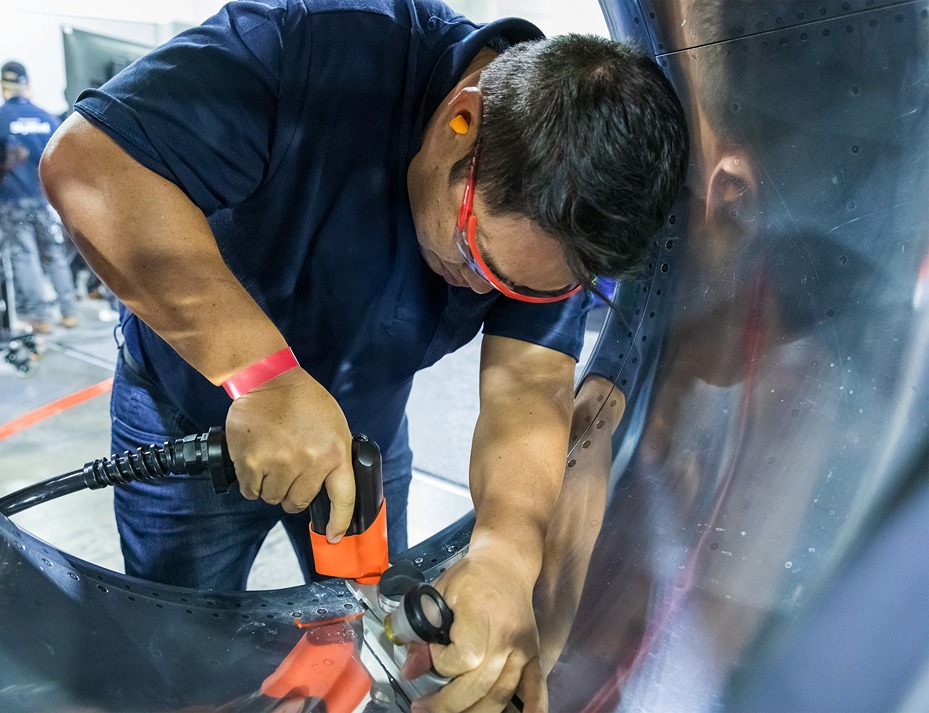
E-Drill uses handheld EDM technology to create a controlled cut in the fastener head without relying on the cutting force of a conventional drill bit. Precision locating tooling keeps the E-Drill centered, while a closed-loop fluid system captures debris during the cutting process.
The basic process is Locate. Cut. Punch.
The result is a repeatable approach to removing difficult aerospace fasteners—including titanium and other high-strength hardware—while reducing many of the challenges associated with conventional drilling.
For a direct comparison, watch E-Drill remove a flush titanium Hi-Lok from an F-5 wing alongside a conventional twist drill.
Watch E-Drill vs. Twist Drill: Titanium Hi-Lok Removal
Or explore common questions about EDM fastener removal, compatible fasteners, operator safety and E-Drill applications:
Watch or Listen to the Full Conversation
The Merge – E62: “Rethinking Aircraft Maintenance with Perfect Point EDM”
Jim Becker and Mike Benitez discuss aircraft maintenance, MRO technology, E-Drill, fastener removal, the skilled maintenance workforce, product development and what it takes to bring disruptive technology into aerospace.
Watch the full episode on YouTube
Listen to the episode on Spotify
Learn More About Perfect Point EDM
Perfect Point EDM develops specialized aerospace maintenance tooling designed around real problems technicians encounter on the aircraft.
Learn more about E-Drill fastener removal technology or contact Perfect Point to discuss your application or schedule an E-Drill demonstration.